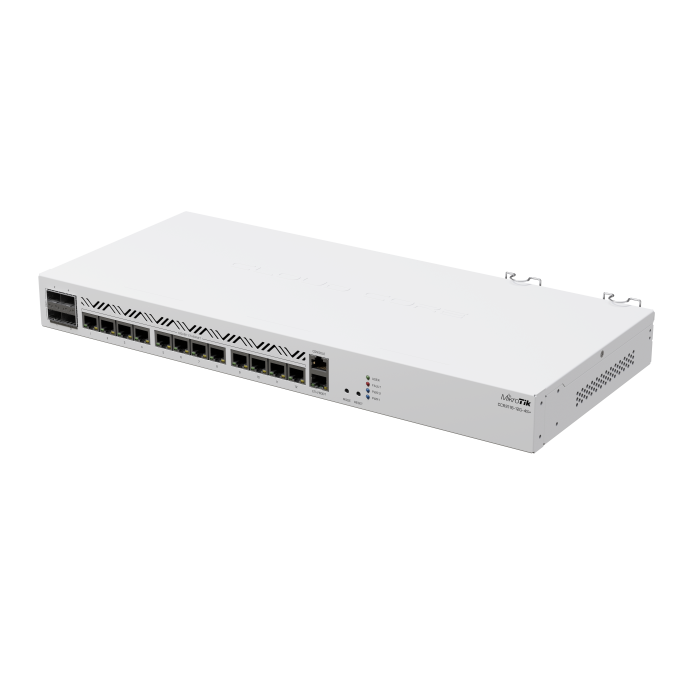
The MikroTik CCR2116-12G-4S+ is an enterprise and carrier-grade core router built on the 16-core Amazon Annapurna Labs Alpine AL73400 processor running at 2 GHz with ARM64 architecture. Compared to the previous CCR1036 flagship with its 36-core MIPS platform, the CCR2116 delivers double the overall throughput and at least 15% higher single-core performance — the metric that matters most for per-connection processing workloads including complex queues, stateful firewall, NAT at scale, and multi-tier QoS policies. It is deployed as a BGP core router for mid-to-large ISPs, an enterprise network edge router, and a 10G routing platform with Layer 3 Hardware Offloading.
The hardware platform provides 16 GB RAM, 128 MB NAND storage, four SFP+ 10G ports connected to the Marvell 98DX3255 switch chip via dedicated full-duplex lines, 12 Gigabit Ethernet ports routed through the same chip, and a separate Gigabit management port connected directly to the CPU for isolated out-of-band access. Each group of four ports has an independent full-duplex connection to the switch chip, eliminating bottlenecks under heavy aggregation loads. Layer 3 Hardware Offloading moves routing decisions to dedicated silicon, freeing all 16 CPU cores for control plane operations. An M.2 PCIe slot expands storage capacity for logging, data collection, or additional RouterOS applications.
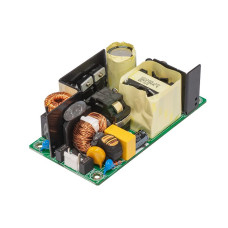
The CCR2116-12G-4S+ runs RouterOS v7 with License Level 6 — the highest tier in the MikroTik ecosystem with no restrictions on tunnels, users, or rule counts. Dual redundant AC power supplies with 100–240V input and hot-swap capability eliminate single points of failure in mission-critical installations. Four active cooling fans maintain stable thermals in high-density rack environments, and the RJ45 serial console alongside the dedicated management port meet the operational requirements of NOC teams and centralized monitoring integrations.
The CCR2116-12G-4S+ is the right platform for ISPs processing full BGP routing tables with thousands of prefixes, for operators running asymmetric traffic with complex per-subscriber queue trees, for enterprise networks requiring stateful firewall at 10G line rate without performance degradation, for data centers deploying hardware-assisted L3 routing, and for any infrastructure where the CPU — not the uplink bandwidth — has historically been the limiting factor.
No questions about this product, be the first and ask your question.